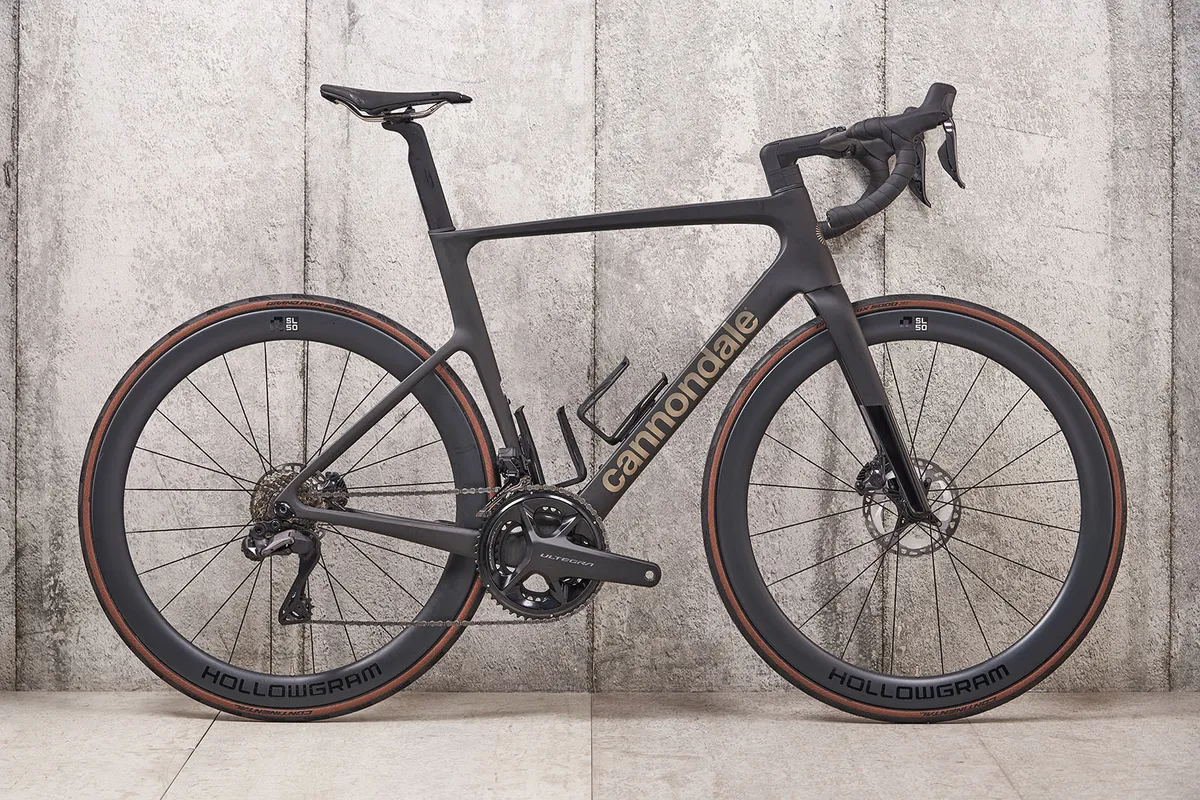
What’s a modern day mountain bike without a groupset? Well, it’s a frame, suspension fork, wheels best road bikes and control items, but it’s not a bike, it’s nothing more than a fancy scooter. Thought of as the bike’s engine room, the drivetrain consists of the cranks, chainring/s (front cogs), chain, cassette (rear cogs), derailleurs and shifters. Simply put, it’s a closed circuit that propels the bike forwards.
In this article, you’ll learn what you need to know when it comes to mountain bike groupsets including what each part does, the critical difference between various price points and other information you’ll need to make an educated decision on which groupset is best for you.
Components of a groupset
Crankset
The crankset is what the bicycle pedals attach to and are what your legs spin in circles as you pedal. On modern mountain bikes, the crankset consists of the crank arms, chainrings (the front cogs) and the axle that connects the two crank arms.
The crankset and its number of chainrings dictate how many forward gears a bike has. Modern mountain bikes have one, two or three, with the latest trend being the fewer, the better.
The length of crank arms does vary, but not as much as seen with road bikes. Crank length in mountain biking is typically more standard to help with leverage at an average lower riding speed. With this, smaller bikes will often use 170mm crank arms, with medium-sized bikes and up using a 175mm crank length. Downhill bikes and similar will use shorter 165mm cranks for improved ground clearance.
Bottom bracket
The crankset spins on a set of bearings, these are known as the bottom bracket. The bottom bracket attaches within the frame, and so there is a large array of options to suit various frame designs. The two key types include ones that thread into place (threaded) and ones that are pressed into place and rely on tight tolerances, these are known as ‘press-fit’ bottom brackets.
Cassette
The cassette is the rear cogs that connect to the rear wheel. These rear cogs dictate how many gears a bike has at the back, with most modern mountain bikes typically offering between eight to twelve gears.
Chain
The chain is what connects the front crankset to the rear cassette. Without the chain, the bike has no drive. A chain is usually made of steel and features a series of interconnected links that rotate smoothly but are difficult to twist laterally.
Derailleurs
Derailleurs are the components that guide the chain between the cogs. These usually work by having a cable, or hydraulic fluid pull them in one direction and then relying on spring tension within the derailleur to pull opposite direction.
Mountain bike clutch derailleur explained bikeexchange blog
With the rear derailleur made of a series of springs, rough terrain in mountain biking can see this component slap around, often leading to lots of noise and the potential of a dropped chain. In recent years “clutch” equipped rear derailleurs have become the standard for intermediate and better mountain bike derailleurs. This clutch creates a one direction friction in the cage that the chain runs through, and offers a quieter ride with a significantly reduced chance of a dropped chain.
New electronic technology sees small servo motors added to some derailleurs, which control the movement; this is known as electronic shifting. Such technology comes at a premium price but removes the risk of mud, water or general wear affecting shift performance. This is because a cable-operated (mechanical) system relies on precise cable tension and cable condition to accurately move the derailleur between gears.
Shifters
Sitting at the handlebars within easy reach, the shifters are your controls for enacting a gear change. The shifters are linked directly to the derailleurs, typically by way of mechanic cable.
The most common type of shifter on a mountain bike is the ‘trigger’ shifter. Here, either your thumb or forefinger is used to actuate a shift. A less common design is that of grip shift, which works by twisting the grip to make a shift. Each brand offers a different style of shifting; we’ll explain this later.
Brakes
Traditionally part of a groupset, mountain bike brakes have broken free into their own category in recent years. In many cases, you’ll still be able to match your brakes to your desired groupset, but it’s far more common to mix-and-match in this regard. This is due to disc brakes becoming the standard choice in mountain bikes. Where over a decade ago rim brakes were still popular, disc brakes now are featured on just about any mountain bike selling for over AU$500.
Disc brakes are easily segmented into two categories: Hydraulic and mechanical. Hydraulic borrows its technology from the automotive world and uses a fluid system to transfer force from the brake lever to the brake pads. Being a sealed system, it’s incredibly low maintenance and easy to operate.
Mechanical disc brakes remain the standard choice for lower-end mountain bikes where the hydraulic systems are too expensive. Here, a wire cable is used to transfer the force at the brake lever to the brake pads. This system is not sealed and is susceptible to dirt, rust, cable stretch and other wear factors. As the brake pads wear, a simple manual adjustment will be needed; whereas with hydraulic systems, such modifications are generally automated.
Gears, ratios and numbers
Much like the engine and transmission found in a car, bicycle gears are used to allow your motor (legs) to cover a range of speeds and gradients efficiently. Here, different gear ratios change how far the rear wheel spins in relation to crank at the front. Easier (lower) gears result in a rear wheel that turns less with regard to the crank, while harder (higher) gears will see the rear wheel travel further for a single revolution of the crank.
Mountain biking often involves low gearing to scale steep hills and overcome loose terrain. Due to this, mountain bikes use specific gear ratios that are best suited to the rugged terrain, and generally lower average speeds compared to other cycling forms. Bigger wheel diameters effectively make the gearing harder, and so as mountain bike wheels have increased in size, the gearing has become relatively more comfortable.
The critical thing to know is that the available gear range and number of gears are not the same thing. The gear range refers to the span from the very hardest (high) to the easiest (low) gear. A bike with only 11 gears can potentially have the same high and low span as a bike with 30 gears.
 Site Title
Leave a comment